
Export products to over thirty countries.
Mar 11,2026 / News
Decorating a tabletop Christmas tree is simpler than most people think — and with the right approach, the results can be just as stunning as a full-sized tree. The key is to work in layers: start with lights, add a garland or ribbon base, layer in your largest ornaments first, fill gaps with smaller ones, and finish with a topper and picks. This process takes as little as 30 minutes and transforms even a 2-foot miniature tree into a breathtaking holiday centerpiece.
Tabletop Christmas trees have surged in popularity. According to a 2023 survey by the National Retail Federation, nearly 28% of American households now display more than one Christmas tree, with tabletop versions being the most common secondary option. They're ideal for apartments, office desks, dorm rooms, mantels, dining tables, and holiday vignettes — anywhere you want festive cheer without committing to a 7-foot centerpiece.
This guide covers everything you need: how to choose a tree, what supplies you need, step-by-step decorating instructions, theme ideas, common mistakes to avoid, and tips for specific placements like dining tables or office desks. Whether you're working with a $15 craft store find or a premium pre-lit model, these techniques will help you create a polished, intentional look.
Content
Before you decorate, you need the right canvas. Tabletop trees come in a wider range of sizes, styles, and materials than most people realize — and your choice will directly affect what decorating strategies work best.
Tabletop trees typically range from 12 inches to 36 inches tall. The most popular sizes sold in the U.S. are 18-inch and 24-inch models, which offer enough branch surface area to layer decorations meaningfully while still fitting on a standard side table or counter.
| Tree Type | Material | Best For | Decoration Approach |
|---|---|---|---|
| Traditional faux pine | PVC or PE plastic | Classic, layered looks | Full layered approach; holds ornaments well |
| Flocked tree | PVC with white coating | Winter wonderland themes | Minimalist; let flocking shine |
| Tinsel/aluminum tree | Metallic foil strips | Retro, glam aesthetics | Fewer ornaments; color wheel lighting |
| Bottle brush tree | Wire and chenille fiber | Vintage, whimsical vignettes | Minimal decoration; group for impact |
| Live mini tree | Real spruce or pine | Natural, rustic styles | Light touch; natural elements |
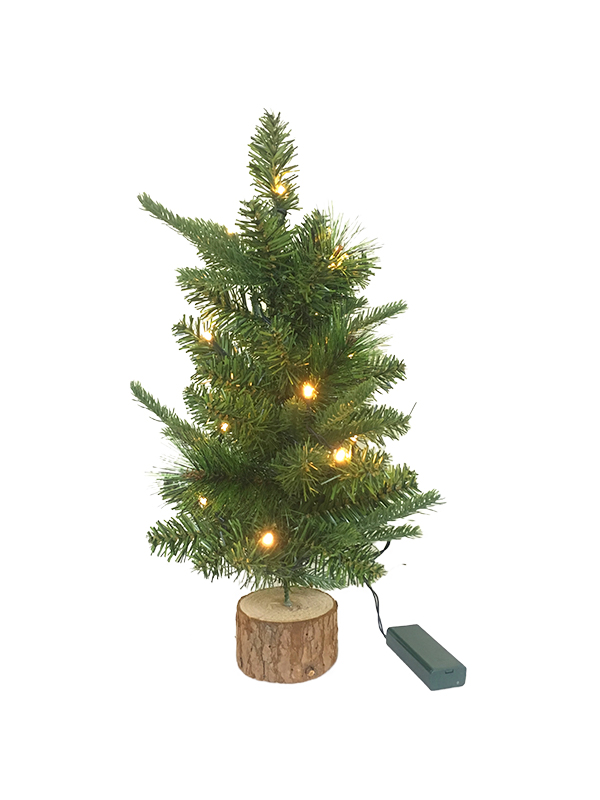
Pre-lit trees save significant time and ensure even light distribution. For tabletop trees under 24 inches, a pre-lit model with 35–50 LED lights is usually sufficient. If you go unlit, plan to add a strand of 20–35 micro LED lights (battery-operated models are especially convenient for tabletop placement, eliminating cord management issues).
Having the right materials before you start makes the process faster and the results more cohesive. Here's a complete list of what you'll need, along with quantity recommendations based on tree size.
| Tree Height | Total Ornaments | Ornament Size | Light Count | Ribbon Length |
|---|---|---|---|---|
| 12–15 inches | 8–12 | 0.5–1 inch | 10–20 | 1–1.5 yards |
| 18 inches | 12–18 | 1–1.5 inches | 20–35 | 1.5–2 yards |
| 24 inches | 20–30 | 1.5–2 inches | 35–50 | 2–2.5 yards |
| 30–36 inches | 30–45 | 1.5–2.5 inches | 50–70 | 2.5–3 yards |
Follow these steps in order. Each layer builds on the previous one, which is why sequencing matters. Skipping ahead — like placing ornaments before your ribbon — often leads to a cluttered, difficult-to-fix result.
Most artificial trees come compressed from storage or packaging. Before any decoration, spend 5–10 minutes separating and bending each branch tip outward and upward. Start from the bottom tier and work your way up. For a natural look, alternate branch tip angles: some pointing slightly up, some horizontal, and a few angled slightly downward. This creates depth that makes decorations look intentional rather than flat.
Check your tree from eye level (the height it will be viewed from its final location). If it looks sparse from the front, bend inner branches forward. If it looks too round, push some outer branches slightly back.
For battery-operated LED light strands, begin at the base of the tree and weave the strand in a loose spiral toward the top, tucking the wire slightly into the interior of the branches rather than laying it on top. Push lights slightly inward so they illuminate the inside of the tree, which creates a glowing depth rather than just surface sparkle.
Warm white LEDs (color temperature around 2700K–3000K) pair well with traditional red, green, and gold palettes. Cool white LEDs (5000K–6500K) suit silver, blue, and white winter themes. Multicolor lights work best with eclectic, playful, or children's themes.
Ribbon is one of the most transformative elements on a tabletop tree, and it's also where most beginners go wrong. The most common mistake is draping ribbon horizontally around the tree like a stripe — this looks amateur. Instead, use one of two professional techniques:
For wired ribbon (which holds its shape), a 2.5-inch width is ideal for 18–24 inch trees. For delicate or vintage styles, use 1.5-inch velvet or satin ribbon. For rustic themes, burlap or plaid ribbon in 1.5-inch widths works beautifully.
Start with your focal ornaments — the largest or most visually striking pieces in your collection. Place these deeper inside the tree on sturdy inner branches, not on the outer tips. This creates depth and prevents drooping. Space them evenly around the tree, stepping back periodically to check balance.
For a 24-inch tree, you might have 5–7 focal ornaments. Avoid clustering them in one area. Use the "triangle rule": if you mentally divide the tree into a triangle grid, place one ornament near the top, two in the middle layer, and two or three in the lower section.
After your focal ornaments are placed, add medium ornaments to fill the visible gaps. These should sit slightly closer to the branch tips than your focal ornaments. Finally, tuck the smallest ornaments into tight spots and near the very tips of outer branches.
A common professional technique is to use ornaments in sets of three: one large, one medium, one small in the same color or finish, grouped in loose triangular clusters around the tree. This creates visual rhythm without looking random.
Decorative picks are branch-like stems with embellishments (berries, pine cones, glittered pods, feathers, stars) attached. Push the wire stem of each pick directly into the tree at the branch joint. Picks should fill visible gaps and add texture without overpowering ornaments.
Common picks to consider: gold berry clusters, frosted pine cone sprays, red holly sprays, cinnamon stick bundles, dried orange slice picks, and feather sprays. Use 3–6 picks for an 18-inch tree and 5–8 for a 24-inch tree.
The topper should be proportionate to the tree's height. A general rule: the topper should be no taller than 20% of the total tree height. For a 24-inch tree, that's about 5 inches maximum. Common tabletop toppers include:
The base is often overlooked but completes the overall composition. Options include a mini tree skirt, a wicker basket, a terracotta pot, a galvanized tin bucket, a decorative wooden box, or a simple length of burlap tied with twine. For a formal look, place the tree inside a small metallic planter. For a rustic farmhouse look, set it inside a weathered wooden crate.
You can also create a vignette around the base of the tree using complementary elements: small wrapped gift boxes, faux snow blanket, pillar candles in matching colors, pine cone clusters, or small figurines. This extends the tree's decorative footprint and makes it look like a styled scene rather than a standalone item.
Choosing a theme before you buy decorations is the single most effective way to achieve a polished, designer-level result. A cohesive theme limits your color palette and ornament styles, which prevents the cluttered "everything-but-the-kitchen-sink" look.
The most timeless holiday palette. Use shiny red ball ornaments, gold glitter balls, and green velvet ribbon. Picks should include holly berries and gold pine cones. Add a gold star topper and a red velvet tree skirt. This theme works in virtually any home style and is especially appropriate for a dining table centerpiece.
Color ratio tip: Use approximately 50% gold, 30% red, and 20% green accents for a balanced look that feels rich rather than chaotic.
Best suited to flocked (snow-covered) tabletop trees. Use iridescent and matte white ornaments, silver glass balls, and pale blue acrylic ornaments. Silver tinsel garland or white feather garland adds softness. Cool white LED lights complete the icy effect. A crystal snowflake topper is ideal for this theme.
This theme photographs exceptionally well and is a popular choice for holiday cards and social media staging. It pairs well with a white or silver base — try placing the tree inside a white ceramic pot.
Incorporate wooden bead garland, burlap ribbon, dried orange slice ornaments, small wooden initial tags, and pine cone picks. Warm white LED lights maintain the cozy, natural feel. A simple twine bow makes an ideal topper. Place the tree in a galvanized metal bucket or a small wooden crate for a complete look.
This is one of the most budget-friendly themes, as many elements can be DIYed (dried citrus slices, painted wooden ornaments, handmade twine bows) or purchased inexpensively at craft stores.
A dramatic, editorial aesthetic that works beautifully on office desks and in modern living rooms. Use matte black ornaments alongside deep emerald, burgundy, and sapphire glass balls. Gold ribbon in a lush, wired texture adds opulence. Feather picks in black or gold provide unexpected texture. A gold crown or geometric star topper finishes the look.
Perfect for a child's bedroom or playroom. Use a mix of red, pink, green, and white ornaments in candy cane, gingerbread man, and peppermint swirl designs. Multicolored LED lights add festive energy. Candy cane ribbon or a polka-dot grosgrain creates a playful, fun feel. A gingerbread man topper or candy cane star completes the theme.
An increasingly popular theme for warm-climate homes and beach houses. Use sand dollar ornaments, starfish picks, shell garland, and aqua glass balls alongside natural linen ribbon. Warm white lights or aqua LED lights work well. A driftwood star or seashell topper completes the look. Place the tree in a woven rattan basket or a glass hurricane vase filled with sand and shells.
Clean, simple, and deeply elegant. Use only red and white ornaments in matte finishes, wooden bead garland, and red gingham ribbon. Restraint is key — leave more empty space between ornaments than feels natural, and resist the urge to add picks or sprays. A small wooden star or a simple red bow topper keeps it in theme. Warm white LED lights maintain the hygge aesthetic.
Where your tree will sit dramatically affects how you should decorate it. A tree viewed from all sides needs even decoration on every angle; a tree placed against a wall only needs decoration on the visible front two-thirds.
A tabletop tree on a dining table is viewed from all sides by seated guests, so it must look polished at 360 degrees. Keep the tree's height proportionate to the table — a tree taller than 24 inches will block sightlines across a standard dining table. For a 6-person table, an 18-inch tree is typically the maximum comfortable height.
For a dining table, use fragrance-free decorations if guests are sensitive to scent. Battery-operated lights eliminate cord management issues. Consider surrounding the tree with votives, greenery sprigs, or a matching table runner to create a cohesive tablescape.
A mantel tree is typically viewed head-on from a distance of 6–12 feet, which means decoration details need to be slightly larger and bolder to read well from across the room. Use ornaments on the larger end of the appropriate size range. Emphasize vertical elements — tall picks, ribbon loops that stand up — since the tree is likely to be viewed against a horizontal mantel structure.
A mantel tree benefits from being part of a larger styled composition. Place matching garland or greenery around the base. Add candlesticks, framed art, or decorative objects in the same color palette on either side of the tree to integrate it into a complete mantel vignette.
Office tabletop trees need to be compact and unobtrusive — typically under 18 inches. They should also be easy to maintain (no water, no fallen needles). Battery-operated pre-lit faux trees are ideal. Keep decoration minimal for a professional look: 8–12 small ornaments, a simple ribbon or garland, and one or two picks at most.
Color palettes for office trees tend to be more neutral and sophisticated — silver and white, gold and cream, or the classic red and green in restrained quantities. Avoid overly playful or sentimental themes in professional settings.
A windowsill tree is viewed from the exterior as well as the interior, which creates an interesting design opportunity. From outside, your tree will primarily be backlit (especially at night), so prioritize ornaments with reflective or translucent quality — glass balls, crystal ornaments, and shiny metallic picks catch window light beautifully.
From inside, the tree is viewed against a light background (the window), which means dark or bold colors will stand out most effectively. Burgundy, navy, or forest green ornaments create beautiful silhouettes. Warm white LED lights will glow warmly against the exterior darkness.
A tree in a child's bedroom should be both fun and safe. Avoid glass ornaments — use shatterproof plastic or felt ornaments instead. Keep the tree anchored in a stable base (not easily knocked over). Battery-operated lights with an auto-shutoff timer are safer than corded models. Let children participate in decorating with their own ornaments to make the tree feel personal.
Consider using a theme tied to the child's interests: dinosaur ornaments for a prehistoric theme, space-themed silver and blue for an astronomy lover, or a rainbow palette for a younger child. Personal, themed trees create cherished memories and traditions.
Handmade ornaments and decorations add a personal, artisan quality that bought items can't replicate. They're also significantly cheaper, and many DIY decorations can be made in bulk in an afternoon with craft store supplies.
The classic DIY ornament recipe: mix 1 cup flour, ½ cup salt, and ½ cup water. Roll to ¼-inch thickness, cut into shapes (stars, trees, angels, initials), and bake at 200°F for 2–3 hours. Once cooled, paint with acrylic craft paint, seal with Mod Podge, and add a ribbon hanger. These cost approximately $0.10–0.20 each to make versus $3–10 for comparable store ornaments.
Origami-inspired folded paper ornaments can be made from scrapbook paper, wrapping paper scraps, or music sheet paper for a vintage look. Star shapes, pinwheels, and accordion-fold fans translate well to small tree ornaments. These are especially effective on rustic farmhouse and Scandinavian-themed trees.
Dried orange, lemon, or grapefruit slices make beautiful, fragrant ornaments. Slice citrus to ¼-inch thickness and bake at 225°F for 3–4 hours, flipping halfway through. Once completely dry, thread ribbon or twine through a small hole punched near the top. These pair beautifully with cinnamon stick picks and are a staple of farmhouse and rustic themes.
Yarn pom-poms in holiday colors (red, white, green, gold) are fast to make with a cardboard pom-pom maker or even two forks. A small pom-pom (about 1.5 inches in diameter) takes less than 5 minutes to make and costs almost nothing. They add a soft, textural element to trees and work especially well on children's bedroom trees and Scandi-themed trees.
Mix 1 cup ground cinnamon with ¾ cup applesauce (no water). Knead into a dough, roll to ¼-inch thickness, and cut into shapes. Air dry for 2–3 days or bake at 200°F for 2 hours. These are naturally fragrant and maintain their scent for years. They're a signature element of rustic and farmhouse tabletop trees.
Print small photos (2x2 or 2x3 inches) on cardstock, punch a hole at the top, and thread through a ribbon hanger. You can laminate them for durability or frame them in small wooden craft store frames. Photo ornaments are among the most meaningful additions to a family's tabletop tree, especially when they document the same tree or same location year over year.
Even experienced decorators fall into predictable patterns that undermine an otherwise well-stocked tree. These are the most common errors and exactly how to fix them.
The most common sizing error. Standard ornaments designed for full-sized 6–7 foot trees are typically 3–4 inches in diameter — these will overwhelm any tabletop tree under 30 inches tall. On an 18-inch tree, a 3-inch ornament looks as proportionally out of place as a basketball on a toddler. Always buy ornament sets specifically labeled for miniature or tabletop trees (typically 1–1.5 inches).
Placing decorations on a poorly shaped tree is like applying makeup to an unmoisturized face — the surface prep matters enormously. A tree with compressed branches looks visually thin, and ornaments placed on it sit poorly and often face the wrong direction. Spend the 5–10 minutes shaping the tree before touching a single ornament.
Novice decorators tend to hang ornaments on the outermost branch tips because it's easiest. This creates a tree that looks decorated only on the outside while the interior is bare. Professional decorators use a 70/30 rule: 70% of ornaments are placed deeper inside the tree (on inner branches) and 30% on outer tips. This creates the layered depth that makes a tree look professionally styled.
Mixing multiple color palettes or thematic ornaments (a nautical starfish next to a traditional Santa next to a unicorn) creates visual chaos. Limit yourself to 2–3 colors maximum and choose a clear theme before purchasing any decorations. If you already own a mismatched collection, select the pieces that best fit one theme and box the rest for another year.
For trees placed in the center of a space (on a dining table, for instance), the back is as visible as the front. Yet most people decorate only the front and sides, leaving the back looking sparse. If your tree will be viewed from all sides, decorate accordingly — or place it deliberately against a wall and focus decoration energy on the visible two-thirds.
A beautifully decorated tree sitting in a plain green plastic stand looks unfinished. The base and surrounding vignette are part of the overall composition. Even something as simple as a length of burlap ribbon tied around the stand dramatically improves the look for essentially zero cost.
Wrapping ribbon around the circumference of a tabletop tree in horizontal loops is one of the clearest signs of an amateur decoration job. Ribbon should be placed vertically or diagonally — either spiraling from top to bottom or folded into loops that cascade down through the branches. Horizontal ribbon creates a striped effect that breaks the tree's vertical flow.
A beautifully decorated tabletop tree doesn't require a large budget. With thoughtful shopping and a few DIY elements, you can create a stunning tree for under $30 — sometimes under $20.
Dollar stores like Dollar Tree carry surprisingly good mini ornament sets — balls in jewel tones, metallic finishes, and traditional red/green/gold are usually available starting in October. A set of 12 mini ornaments for $1.25 is genuinely competitive with craft store pricing. Post-holiday sales (December 26 onward) offer 50–80% discounts — this is the best time to stock up for next year.
Before buying ornaments, walk through your home with fresh eyes. Interesting buttons, vintage brooches, ribbon-tied gift tags, family photos in mini frames, small toy figures, spools of colorful thread, and even folded origami shapes from patterned paper can all serve as charming, meaningful ornaments. These add personality that mass-produced sets simply can't replicate.
If you have a limited budget, spend it on ribbon and lights — these two elements have the most visual impact. A $6–8 roll of quality wired ribbon transforms any tree more significantly than $20 worth of budget ornaments. Save on ornament quantity by using picks and DIY filler to cover gaps rather than buying more ornament packs.
Gift wrapping materials double surprisingly well as tree decoration. Small coordinating gift tags on ribbon loops become ornaments. Metallic tissue paper can be folded and tucked into branches as filler. Lengths of decorative washi tape can be wrapped into small bow shapes. Thinking about decoration more broadly — beyond the ornament aisle — opens up many low-cost options.
Displaying multiple tabletop trees together — called a "tree farm" or "Christmas village" arrangement — has become one of the most popular holiday decor trends. Done well, it creates a magical, immersive display. Done poorly, it looks like a craft store clearance shelf.
Group 3, 5, or 7 trees of varying heights together (odd numbers read more naturally than even numbers). Use trees in graduated heights — for example, 12 inches, 18 inches, and 24 inches. Arrange them in a loose triangular formation with the tallest in the center or offset to one side, flanked by the shorter trees.
For a cohesive look, maintain a shared color palette across all trees while varying the decorating style slightly — one tree might be ornament-heavy, another might be simpler with just lights and ribbon, and a third could be a bottle brush style. The shared palette ties them together while the variety keeps it visually interesting.
In a multi-tree display, you can mix styles (traditional, flocked, bottle brush, tinsel) as long as the color palette remains consistent. A group of trees in all-white (one flocked, one tinsel, one traditional) with matching silver and icy blue ornaments creates visual texture through material contrast without color chaos.
A multi-tree display benefits from a unified base surface. Options include: a runner of faux snow fabric, a sheet of white felt, a wooden board or tray, or a length of burlap. Place the trees on the surface and add complementary elements between and around them — wrapped boxes, pine cone clusters, LED fairy lights scattered across the surface, small figurines, or miniature lanterns.
Proper storage extends the life of your decorations significantly and makes next year's setup far easier. Most craft ornaments and decorations have a usable life of 5–15 years with proper care; poor storage can reduce this to 1–2 seasons.
Store your artificial tree in its original box if possible, or invest in a dedicated tree storage bag (available for $15–25). Do not store artificial trees in attics where temperatures regularly exceed 100°F, as this degrades PVC materials and can cause tinsel trees to lose their metallic finish. A cool, dry closet or basement is ideal. Flocked trees should be stored in a box rather than a bag to prevent the flocking from being compressed or scraped off.
Small ornaments are best stored in divided compartment boxes (sold specifically for ornament storage, or repurpose fishing tackle boxes). Wrap fragile glass ornaments individually in tissue paper or bubble wrap. Store picks and sprays in a flat-bottomed box to prevent bending. Store ribbon loosely rolled, not tightly wound, to prevent permanent creases in wired ribbon.
If you decorate multiple trees with different themes, label your storage containers by theme rather than just "Christmas ornaments." A label like "Dining Table Tree — Red/Gold" on one box and "Office Desk Tree — Silver/White" on another makes next year's setup dramatically faster. Take a photo of each decorated tree before dismantling it and tape the photo to the storage box as a visual reference.
A 24-inch (2-foot) tabletop tree typically looks best with 20–30 ornaments in the 1.5–2 inch size range. This gives adequate coverage without overcrowding the branches. Supplement with 4–6 decorative picks and ribbon to fill visual gaps without adding more ornaments.
Generally, no. Standard ornaments (3–4 inches) will overwhelm any tree under 30 inches. Use ornaments specifically designed for miniature trees: 1–2 inches for trees under 24 inches, up to 2.5 inches for trees in the 30–36 inch range.
Battery-operated micro LED lights are the most practical choice for tabletop trees because they eliminate cord management concerns and allow placement anywhere. Look for strands with a timer function (typically 6 hours on / 18 hours off) so you don't need to manually switch them. Warm white (2700–3000K) suits traditional and rustic themes; cool white or multicolor suits modern and playful themes.
Several techniques help: thoroughly fluff and separate every branch tip before decorating; use decorative picks (berry clusters, pine cone sprays) to fill gaps; place some ornaments deep inside the tree rather than all on outer tips; use ribbon loops to fill large empty sections; and consider wrapping the base area with extra greenery picks to extend the visual volume.
This depends on the tree's placement and theme. A mini tree skirt works well for traditional and classic themes. A decorative container (pot, basket, bin, or box) elevates the tree's visual impact and can be part of the overall vignette styling. Containers tend to look more polished and intentional in styled settings like dining tables and mantels.
Yes, but with a few adjustments. Live trees (often sold as small Norfolk Island pines, potted spruce, or rosemary topiaries shaped like trees) have real, delicate branches that may not support heavy ornaments well. Use only lightweight ornaments and avoid heavy picks. Wired lights can be problematic on live trees due to branch flexibility — battery-operated clip lights or lightweight LED curtain lights work better. Water the tree regularly to maintain branch flexibility and prevent needle drop.
Holiday décor trends evolve every year, and keeping an eye on current styles can help you make choices that feel fresh and contemporary rather than dated. Here are the most visible trends in tabletop Christmas tree decoration.
After years of minimalist dominance, maximalism has made a strong return in holiday décor. This trend embraces layered textures, mixed metals, and an abundance of ornamentation — but with intentionality. The key distinction is that maximalist trees still have a clear color palette; they simply use more elements within it. Expect to see trees layered with velvet ribbon, beaded garland, clusters of mixed-finish ornaments (matte, shiny, glittered all together), and abundant picks.
Organic and natural decoration continues to grow in popularity. Dried botanicals, preserved eucalyptus, dried pampas grass, wooden slice ornaments, cinnamon stick bundles, and real pine cone picks have all seen significant commercial growth. This trend aligns with broader consumer interest in sustainability and natural aesthetics. It also complements the rustic, farmhouse, and cottagecore design styles that remain widely influential.
Personalized ornaments have become a significant gift category, and they're increasingly used on tabletop trees as a way to create a curated, storytelling display. Name ornaments, year ornaments, pet portrait ornaments, and milestone markers (baby's first Christmas, first home, graduation year) add deeply personal meaning that transforms a decorated tree into a memory collection.
The interior design world's shift toward mixing metals — no longer limited to choosing between gold and silver — has influenced holiday décor. Combining gold, silver, copper, and bronze elements on a single tree creates a layered, luxurious effect. The key is to unify the metals with a shared base color — all jewel tones, all white and cream, or all black — so the mixed metals feel intentional rather than chaotic.
Retro holiday aesthetics — particularly mid-century modern and 1950s–1970s styles — have seen a resurgence. Aluminum tinsel trees with color wheel lighting, Shiny Brite-style glass ornaments in soft pastels and chalky finishes, mercury glass picks, and vintage-inspired paper ornaments are all expressing a nostalgic holiday sensibility that resonates with current design culture.
Our company was Established in 2003, it has been over 20 years.

NO.16, Xiaren Industrial District, Jinting Town, Shengzhou, Shaoxing City, Zhejiang Province, China.

+86-0575-83160278

 English
 Español