Export products to over thirty countries.
May 13,2026 / News
Content
If you want the most realistic-looking artificial Christmas tree, choose a PE (polyethylene) pine needle tree. If you're on a budget and prioritize durability over realism, a PVC (polyvinyl chloride) tree is a practical choice. Most premium trees today use a blend of both materials to balance aesthetics and cost. Knowing what to look for before you buy saves you money, storage space, and years of regret.
The material of the pine needles is the single most important factor in how your tree looks and feels. Here's a direct comparison:
| Feature | PE Trees | PVC Trees |
|---|---|---|
| Appearance | Highly realistic, molded from real branches | Flat, shiny, uniform look |
| Texture | Soft, natural feel | Stiff, plastic feel |
| Price Range | $150–$600+ | $30–$150 |
| Durability | 10–20 years with care | 5–10 years |
| Needle Shedding | Minimal | Moderate over time |
| Best For | Living rooms, showpiece displays | Kids' rooms, offices, secondary trees |
PE needles are injection-molded from actual pine needle molds, giving them a three-dimensional, lifelike shape that PVC simply cannot replicate. PVC needles are cut from flat sheets of plastic film and twisted onto wire branches — functional, but visually flat.
Whether you're shopping in-store or online, use these six criteria to evaluate any artificial Christmas tree before purchasing.
Check the product description carefully. Many mid-range trees advertise themselves as "realistic" but use 90% PVC with only 10% PE tips. A true PE-dominant tree will say "PE molded needles" or "real-feel tips throughout." The higher the PE percentage, the more natural it looks — and the higher the price.
A fuller tree has more branch tips. As a general rule:
Sparse trees look fine when bare but leave obvious gaps once decorated. Always check the tip count in product specs.
Measure your ceiling height before buying. Most homes with standard 8-foot ceilings work best with a 6.5- to 7-foot tree, leaving room for a star or angel topper. Also check the base diameter — a 7-foot tree can span 50–60 inches wide at the base, which may crowd a small living room.
Pre-lit trees save setup time but come with a risk: if one section's lights fail after the warranty period, replacement is difficult. If you buy pre-lit, look for trees with LED lights rated for 25,000+ hours and dual-color or color-changing options. Unlit trees give you full creative control but require separate light strands — budget roughly 100 lights per foot of tree height for a well-lit result.
The internal frame determines how well the tree holds ornaments and its own shape over years of use. Look for:
Always verify that the tree meets fire-resistance standards. In the US, look for UL (Underwriters Laboratories) certification, which confirms the materials have passed flame-spread testing. In the EU, look for CE marking. Never buy an artificial tree — especially one with built-in lights — without a verified safety certification.
PE stands for polyethylene, a thermoplastic material also used in food containers and cutting boards. In Christmas tree manufacturing, PE is injection-molded around actual pine needle clusters to create exact three-dimensional replicas of real branches. The result:
Top-tier PE trees from brands like Balsam Hill can cost $400–$900, but many shoppers report using the same tree for 15+ years — making the cost-per-season comparable to or lower than annual real tree purchases (average real tree: $80–$100/year in the US).
PVC (polyvinyl chloride) is the traditional material used in artificial trees since the 1950s. Needles are punched from flat PVC film and twisted around wire branches in a regular, symmetrical pattern. While this looks less natural than PE, PVC trees have legitimate advantages:
One concern with PVC: older or low-quality PVC trees may contain lead stabilizers, which were historically used in the manufacturing process. In the US, trees sold after 2011 are generally lead-free due to regulatory pressure, but always check for a California Prop 65 warning or request material safety data from sellers if buying vintage or unbranded trees.
Most trees in the $100–$300 price range use a combination: PVC branches for the inner structure and PE tips on the outermost branch ends — the parts most visible after fluffing. This blend delivers noticeable realism improvements over all-PVC trees at a fraction of the cost of all-PE models.
When evaluating a blend tree, ask:
A well-designed blend tree with 50%+ PE tips, dual-color needles, and 1,500+ branch tips at 7.5 feet can look nearly as impressive as a pure PE tree — for $150–$250 less.
The right tree depends heavily on where and how you plan to use it. Here's a practical breakdown:
| Use Case | Recommended Type | Suggested Height |
|---|---|---|
| Main living room showpiece | PE or PE/PVC blend | 7–7.5 ft |
| Child's bedroom | PVC (colorful options) | 3–4 ft |
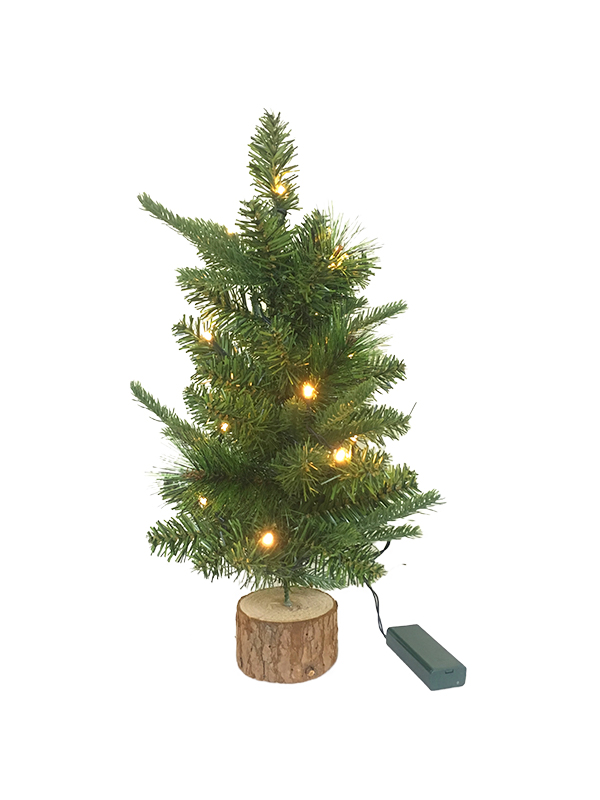
| Office or reception desk | PVC tabletop tree | 18–24 in |
| Apartment with low ceilings | PE/PVC blend, slim profile | 6–6.5 ft |
| Outdoor covered porch | UV-resistant PVC | 4–6 ft |
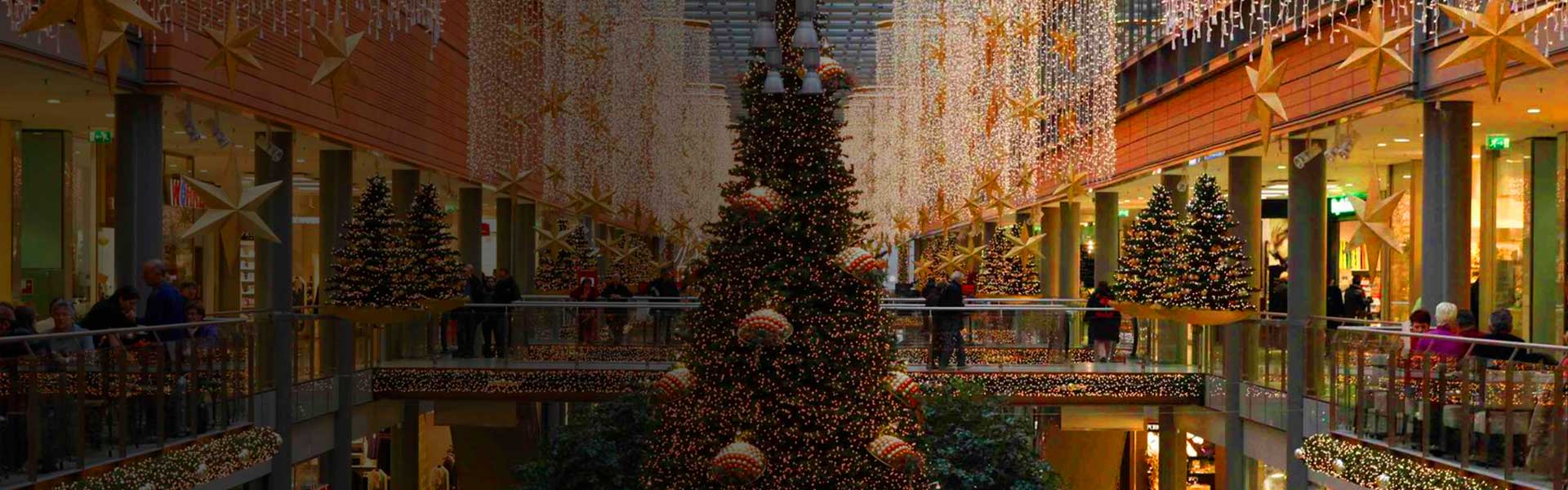
| Grand foyer or vaulted ceiling | Full PE, wide-base | 9–12 ft |
Proper storage is what separates a tree that lasts 5 years from one that lasts 20. Follow these steps:
A PE tree stored correctly in a climate-controlled closet can realistically last 15–20 years without significant degradation in appearance.
Our company was Established in 2003, it has been over 20 years.

NO.16, Xiaren Industrial District, Jinting Town, Shengzhou, Shaoxing City, Zhejiang Province, China.

+86-0575-83160278

 English
 Español